
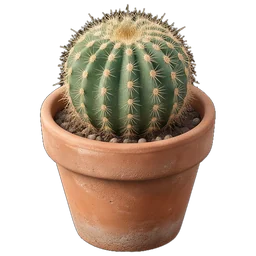





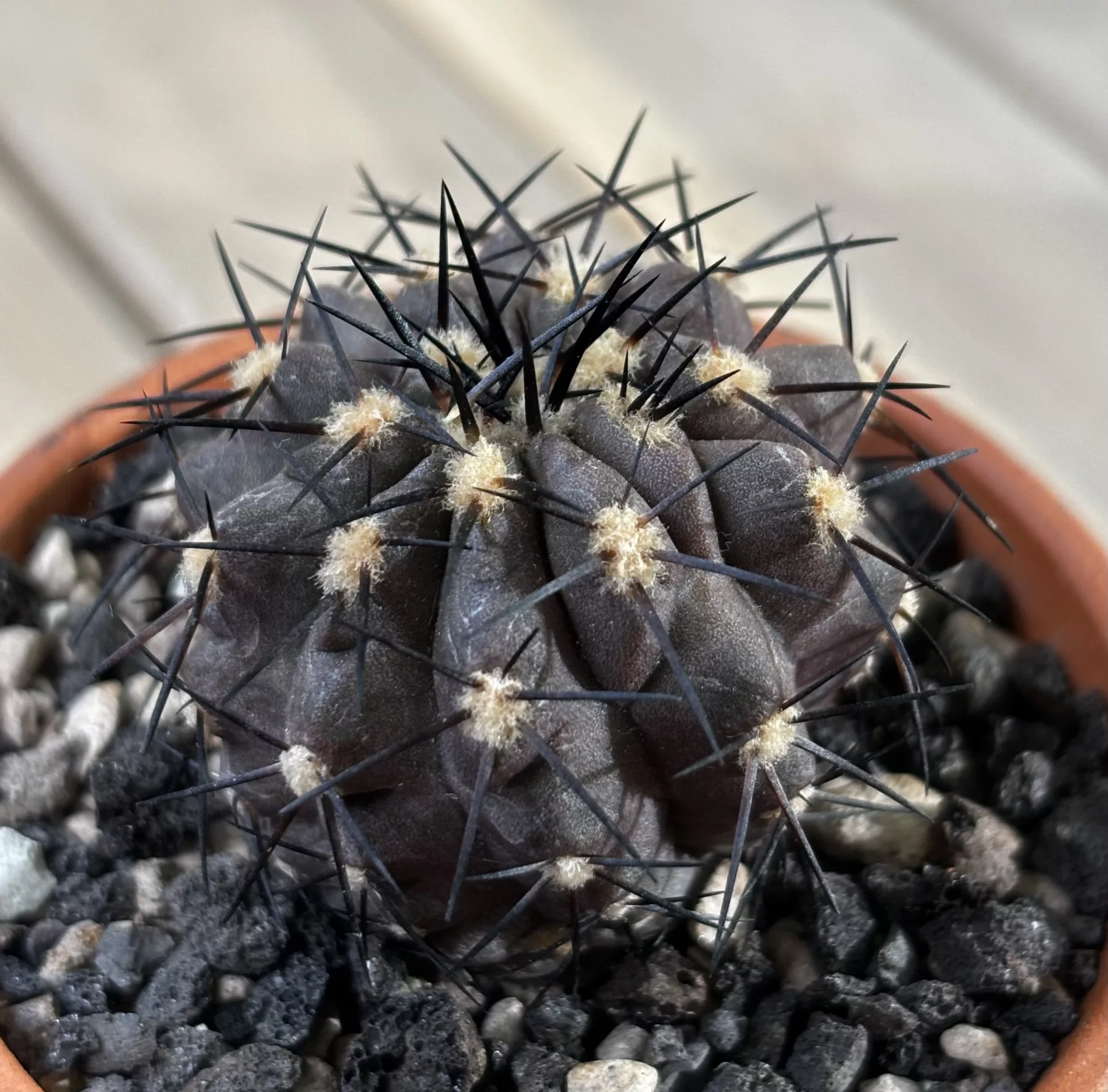
Copiapoa aff. echinoides
Copiapoa aff. echinoides
 WaterlowLightfull sunHumiditylowMin. temperature8 °C
January
Don’t water – dry winter rest. Slight shrivelling is normal.
No feeding now.
Cool and bright, 8–15 °C: unheated room, stairwell, cold windowsill or frost-free greenhouse.
February
Don’t water – dry winter rest. Slight shrivelling is normal.
No feeding now.
Cool and bright, 8–15 °C: unheated room, stairwell, cold windowsill or frost-free greenhouse.
March
Gentle start: the first small drink once you see buds or new growth and it warms up.
First weak dose at the end of the month if it is actively growing.
The sunniest window (south or west).
Move it somewhere brighter and warmer and end wintering. Get it used to strong sun gradually.
If roots fill the pot: fresh soil, a pot 1–2 cm larger. Water sparingly for a week afterwards.
April
Deeply, but only once the soil is completely dry.
Cactus fertiliser once a month at half strength.
The sunniest window (south or west).
If roots fill the pot: fresh soil, a pot 1–2 cm larger. Water sparingly for a week afterwards.
May
Deeply, but only once the soil is completely dry.
Cactus fertiliser once a month at half strength.
Best outdoors: sunny balcony, terrace or garden – acclimatise it to full sun gradually.
After mid-May (last frosts) it can go outside – keep it in partial shade for the first 1–2 weeks to avoid sunburn.

It flowers next month – once you see buds, don’t move it any more.
June
Deeply, but only once the soil is completely dry – more often in heatwaves, preferably in the evening.
Cactus fertiliser once a month at half strength.
Best outdoors: sunny balcony, terrace or garden – acclimatise it to full sun gradually.
It usually flowers now – don’t turn or move it, and log the bloom in your diary!
Above 35 °C, shade it at midday to prevent sunburn.
July
Deeply, but only once the soil is completely dry – more often in heatwaves, preferably in the evening.
Cactus fertiliser once a month at half strength.
Best outdoors: sunny balcony, terrace or garden – acclimatise it to full sun gradually.
It usually flowers now – don’t turn or move it, and log the bloom in your diary!
Above 35 °C, shade it at midday to prevent sunburn.
August
Deeply, but only once the soil is completely dry – more often in heatwaves, preferably in the evening.
Cactus fertiliser once a month at half strength.
Best outdoors: sunny balcony, terrace or garden – acclimatise it to full sun gradually.
It usually flowers now – don’t turn or move it, and log the bloom in your diary!
Above 35 °C, shade it at midday to prevent sunburn.
September
Deeply, but only once the soil is completely dry.
No feeding now.
Best outdoors: sunny balcony, terrace or garden – acclimatise it to full sun gradually.
Bring it in when nights drop below 13 °C. Check for pests first.
October
Taper off gradually: very little by the end of the month.
No feeding now.
The sunniest window (south or west).
Move it to its cool, bright winter spot and taper off watering. Log it with one click in the Care hub.
November · now
Don’t water – dry winter rest. Slight shrivelling is normal.
No feeding now.
Cool and bright, 8–15 °C: unheated room, stairwell, cold windowsill or frost-free greenhouse.
December
Don’t water – dry winter rest. Slight shrivelling is normal.
No feeding now.
Cool and bright, 8–15 °C: unheated room, stairwell, cold windowsill or frost-free greenhouse.
Extremely slow with sensitive roots – err on the side of too little water.
Growth photos
Log in to comment.